
Is Your Quality Checklist Outdated? How to Improve Your Product Inspection Plan



Table of Contents
Your factory finished production on an important order, and it passed pre-shipment inspection. But once your product reached the market, the customer complaints started rolling in.
You’re left wondering: “If my goods passed inspection, what went wrong?”
One possibility is that the inspection plan didn’t cover the risks that actually mattered for your product.
You might be using a generic checklist, a useful starting point, but it may not address your product’s specifications, assembly process, or details that affect customers after delivery.
Even if you took the time to plan each aspect carefully with your team, it may have become outdated as products, materials, suppliers, and production processes changed over time.
A useful inspection plan is tailored to your product and reviewed as you learn more about it. Here’s how to build one that can keep up with the changes.
Start with the product, not just the category
Sometimes, buyers accept a checklist that their third-party inspector put together without any input from them. They think: “The inspectors have a lot of experience with my product category, so the checklist they create should be good enough.”
But your product is unique, and no one should understand it better than you. So, a product category can help you find a starting point, but it doesn’t tell the whole story.
Andy recalls, “In the early 2000s, when I first moved to China with a quality assurance service provider, I was responsible for the outdoor furniture category.” While he was visiting a factory making outdoor, swiveling chairs, the buyer sat down on one of the chairs, and “Two people from the factory rushed over to catch him as he fell forward.”
The chair became unbalanced because of how it was assembled. “There was a metal plate between the base of the chair and the wicker upper chair,” and you could assemble it either way. If it was facing the right way, it was fine, but if you assembled it facing the other way, it became a hazard.
This specific issue didn’t apply to all wicker chairs on the market. Products within the same category can have different designs, materials, components, and risks. Your inspection plan should reflect the specific product you’re buying, who you’re buying it from, and what you need the inspection to establish.
You also need to consider why you are inspecting in the first place.
Are you checking that the goods match what you ordered? Are you looking for known defects, confirming assembly, or checking whether packaging and labels are right? Be clear about what you need to learn from the inspection report. That purpose helps determine which checkpoints belong in the plan.
Specifications and an approved sample can provide a foundation. A template may also help, but use it as a starting point, not a finished plan. Review it against your product’s actual features and risks, then add or adapt checkpoints where needed.
Make the criteria clear to everyone

An inspection plan only helps when the buyer, factory, and inspector understand it the same way. Vague criteria can leave room for different interpretations and disagreement about whether the product passes.
Consider a clothing item labeled “Extra Large.” The label alone may not be enough to define what the size means.
Andy likes to joke that “I’ve always been a little on the heavier side,” wearing an XL in the States. But when he moved to Asia and learned about the sizing conventions there, he “Didn’t like that number in front of the X,” and Billy notes that “I wear a medium in the US, but then in China I wear 2XL.”
Measurement conventions not only vary from region to region, but also from brand to brand.
Establishing clear measurement specifications for things like collar size, arm length, and body length makes the specification more concrete. The same principle applies to other product attributes: if color, feel, or another quality is subjective, define how to assess it as clearly as possible.
Review the criteria with the people involved in making and inspecting the product. The goal is to give everyone a shared reference point, instead of assuming a broad description means the same thing to all parties.
Include the checks that matter in use

The product itself isn’t the only thing that needs attention. Assembly, packaging, labels, tickets, and other details can affect whether goods meet expectations and move smoothly through the customer experience.
Andy notes that his experience with the wicker chair (mentioned earlier) led his team to start assembling an item during inspection, rather than relying only on a sample assembled in a lab under test conditions.
Packaging is another area that can create its own problems. A UPC label should not only scan; the scan should return the information printed on the label. Packaging color, markings, and ticketing may also need to match the approved requirements.
Andy describes a case where “We had a retail brick-and-mortar client many years ago producing the same exact item at two suppliers.” The product was supposed to have identical packaging regardless of supplier, but “The shade of the primary brand’s colors was not identical on the two master cartons, which led to lots of issues.”
So, think through what needs checking for your product: how it’s assembled, how it’s identified, and how it’s packed. Not every product needs the same checkpoints, so tailor the plan rather than copying it wholesale from a standard list.
Treat the plan as a living document

A plan that fit your product when it was first created may not fit it forever. Suppliers can change components or raw materials. A product may move to another factory, or the manufacturing process may change.
These changes don’t always require a new inspection checkpoint, but you need to know about them so you can decide whether the plan still covers the right risks.
Set a regular time to review the plan. Andy suggests that “There’s no set timeline, but I would suggest at a minimum, probably annually.”
You should also review it when relevant changes occur, and you may choose to review plans by product category or on a schedule that works for your team. The important thing is not to let the checklist sit untouched while the circumstances around your product change.
Use what you’ve learned to guide the review. Look at inspection results, including passes, failures, and specific defects, as well as returns, customer comments, online reviews, and internal feedback.
Ask your inspection partner or internal team what complaints, returns, or quality issues they’ve noticed. Then decide whether the information points to a gap, a clearer criterion, or a checkpoint that should be updated.
A practical review for your next inspection
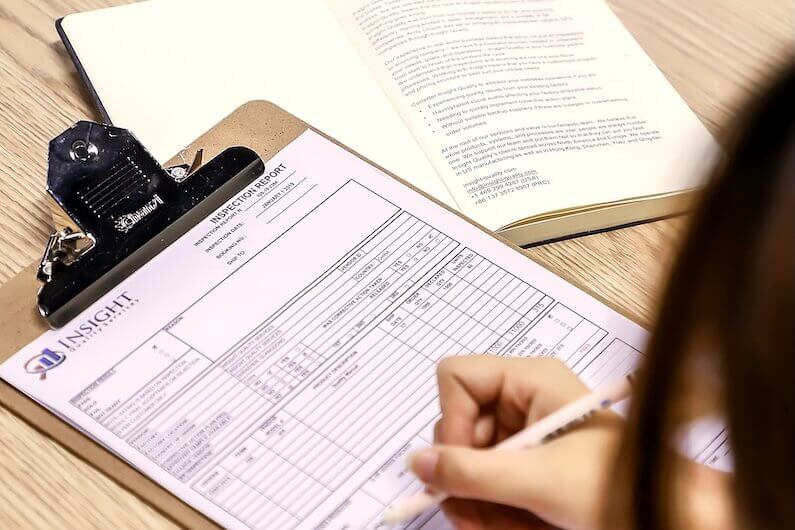
Before your next inspection, ask:
- Does this plan reflect the product we’re making now?
- Are the criteria clear to the buyer, factory, and inspector?
- Does it include relevant assembly, packaging, and labeling checks?
- Have our materials, components, suppliers, or processes changed?
- What have inspection results, returns, and feedback taught us since the last review?
A product inspection plan isn’t just a form for you to complete before goods ship. It’s a tool for checking what matters for your product and learning from what happens over time. Start with the product specifics, make the criteria clear, and keep the plan current as you gather new information.
If you want to work with an inspection services provider that can be your eyes and ears on the ground at the factory, contact us. We’d be happy to discuss your situation and see if we might be a good fit.
AQL Inspections 101: How They are Conducted
Authors