
Your Product Inspections Might be Ineffective and Wasting Your Budget


Table of Contents
“Just inspect every shipment before it leaves the factory” is the most overrated advice you’ll ever get as an importer.
Many companies start out with a Pre-Shipment Inspection on every order or every other one, and it works for a time without issue. They eventually run into trouble, though, because they fail to modify their approach when:
- Their order volume goes up.
- They start adding new suppliers.
- Their purchase orders become more complex.
These events change your quality risk level. As they happen, you should consider adjusting your quality oversight so you don’t become vulnerable to unexpected manufacturing defects and budget waste.
Here, we discuss how to make smart decisions so that your quality assurance program is efficient and effective.
What Happens When Your Order Volume Goes Up?
If you understand how AQL works, you know that just because your volume increases 30 times doesn’t mean you have 30 times the need for inspection sampling size (it goes up about 4 times).
However, increased volume does increase your risk exposure considerably.
When you start ordering more units or placing more frequent Purchase Orders (POs), the factory will adjust how they operate, leading to more variability in the types of defects you’ll see. Why?
Your supplier might:
- Add new production lines to accommodate your orders.
- Have more and different workers making your products across multiple shifts.
- Purchase more incoming raw materials, some of which may come from new suppliers.
With more potential points of failure, it’s critical to ensure your processes are being followed.
There is no single answer about how to change your inspection plan when volumes increase, because it depends on the specifics. But one potential change that sometimes makes sense is to inspect earlier.
Inspecting Earlier in the Production Process
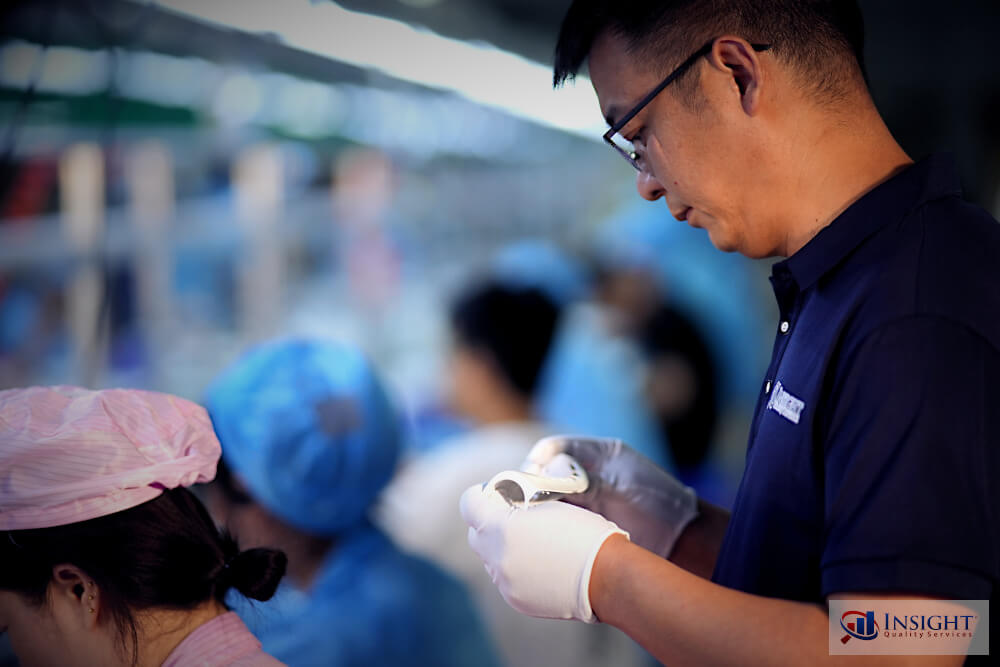
A great way to catch issues earlier, while your goods are still on the production line is with During Production (DUPRO) Inspections. They happen once at least 20% of your goods are finished, as opposed to Pre-Shipment Inspections, which happen once goods are 100% complete.
They make the most sense when you:
- Have large quantities in continuous production.
- Need to avoid shipping delays that result from reworking.
- Want more insight into what happens on the production line.
- Need to verify that workers are following your processes.
By catching issues earlier, you can work with the factory to fix the process right away and waste less time and material.
Inspecting earlier is not a given just because your volume goes up. So, it’s best to examine the quality data your team is collecting and discuss it with your inspection service provider (like Insight) to see if it’s the right fit for your situation.
Whatever the case, there is one thing you absolutely should not do. That is, decide to double, triple, or 30x your Pre-Shipment Inspections simply because that’s how much your volume increased. That may be the answer, but look at your situation carefully.
What Happens When You Add New Suppliers?

As your volume grows, you might decide to add new suppliers. Maybe you want to spread your risk with a backup factory, or you’ve decided to make new products. This presents its own set of challenges.
The key question becomes:
Will your new supplier produce to the same level of quality as your existing supplier?
If you’re producing the same item, and units from different suppliers are sitting on the store shelf side-by-side, you need to ask yourself:
- Do all the units match perfectly, regardless of supplier?
- Does the packaging always match?
The quality control challenges that come with this type of growth can be overcome, but doing so involves good communication with suppliers and continual assessment:
- Are new suppliers training their workers and procuring raw materials in the same way as your existing suppliers?
- Do you have your process well documented?
- Are you always sharing your process across suppliers when things change?
If you have a weak and immature quality program, then as you grow with new suppliers, those weaknesses are going be stressed and potentially cause problems that you didn’t know existed.
That’s why you have to start things off on the right foot by doing proper due diligence with any new supplier.
How to Verify That a Factory Can Meet Your Requirements
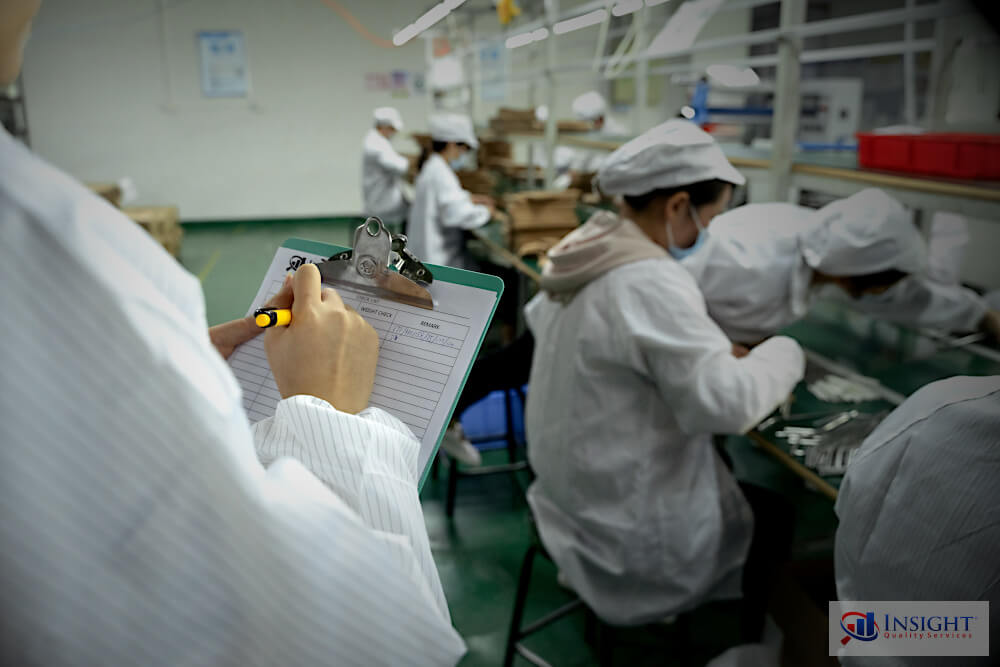
When you want to know what your new supplier is actually capable of, conduct a factory audit. It’s a supplier assessment that takes place at the facility, where a trained auditor examines their systems, capacity, workplace environment, or capabilities.
It lets you assess the situation on the ground, rather than simply relying on the factory’s word. You sometimes discover that a factory has weaknesses they aren’t making apparent. Sometimes, you even discover they are being outright deceptive.
Here’s a little story about deception:
One of Insight’s auditors went to a factory recently. The assessment included verifying the inventory count inside a warehouse. The supplier had made claims about their production capacity and was supposed to have a couple hundred thousand units of completed stock on hand.
The cartons were piled high on pallets that reached above eye level, but our auditor noticed something strange. It seemed there might be a big hollow space surrounded by four walls of pallets.
He asked a forklift driver to move one.
With the pallet out of the way, it revealed a big empty space where all the completed stock was supposed to be. The factory had a few thousand units on hand, a small fraction of the couple hundred thousand they had claimed.
What you see on the surface doesn’t always match reality, so it helps to have someone on the ground to conduct a detailed factory audit and pull back the curtain.
Managing Your Quality Budget Efficiently Across Multiple Suppliers

You probably don’t have an unlimited budget, so if you want to spend it wisely, don’t treat all your suppliers the same way.
You might have a supplier that consistently sends their lab test samples on time and gets pass results on the first submission. Another supplier does the opposite, and they also consistently request to move your ship date out because they’re running late. Every supplier is going to be different.
When one factory poses a higher risk, shift some of your oversight to that supplier and away from a low-risk supplier. You might inspect 1 of every 4 shipments at Supplier A and 1 of every 2 at Supplier B.
It’s crucial to make these decisions based on data. Look at not only their inspection history, but also their audit and lab test history, and assign a risk level to each supplier. Remember that equal oversight doesn’t equal smart oversight.
What Happens When Your POs Become More Complex?
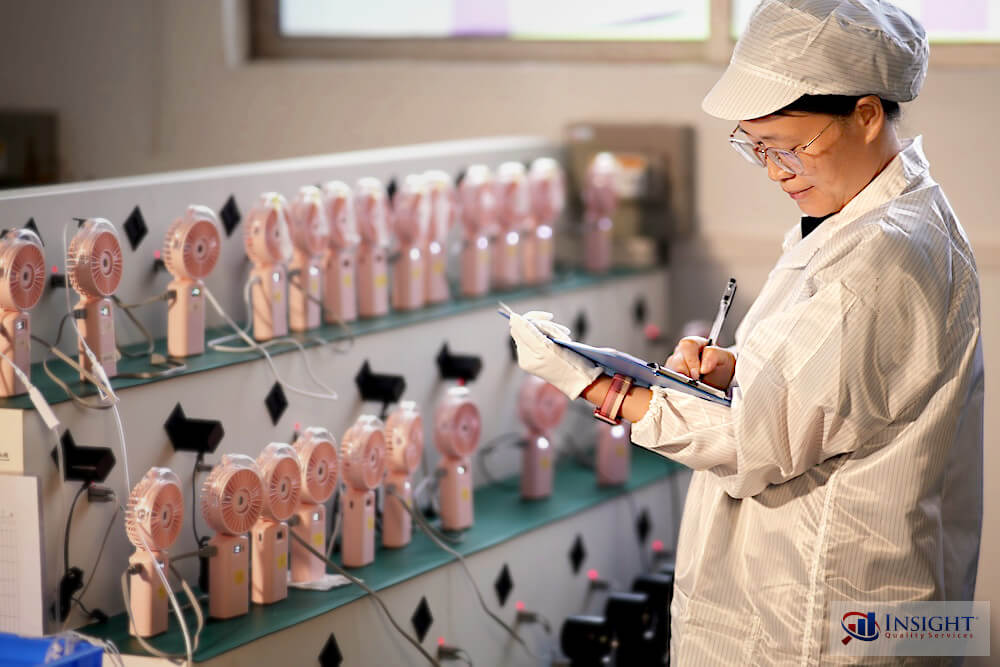
When your product catalog goes from five SKUs to 30 SKUs because of new variations, you need to decide how they will affect your quality oversight. How do you do that?
More variables introduce more risk, but more variables and more SKUs don’t always require an explosion in the number of inspection days or the time required to inspect.
Some types of variation add more risk than others.
For example, when you’re making coffee mugs and add 6 new primary colors, that adds minimal defect risk. However, if you start adding new sizes like small, medium, and large, the risk is more significant.
Here are two key things to consider when you think about adding new options to your product.
1) How Does Variation Affect My Inspection Process?
Not every type of variation increases risk, but adding complexity, such as sizing, material, construction, or function can. So, consider updating your inspection process and checklist to reflect the changes in your product’s risk profile. Make sure you are checking all the different versions in sufficient quantity.
2) Is My Factory Actually Capable of Making All These Versions?
Another factor to consider is how well your supplier can handle the new variables you want to create. Does the factory have the capacity and the ability to handle the different versions?
Making your product in one size and then adding different colors is a lot easier than adding different sizes or using new components and raw materials. This is where a factory audit can come into play, as we discussed above.
When you’re thinking about adding different variations of your product, always consider any new risks that those variations pose and adjust your quality oversight accordingly.
Make Adjustments to Your Program As Its Risk Level Changes
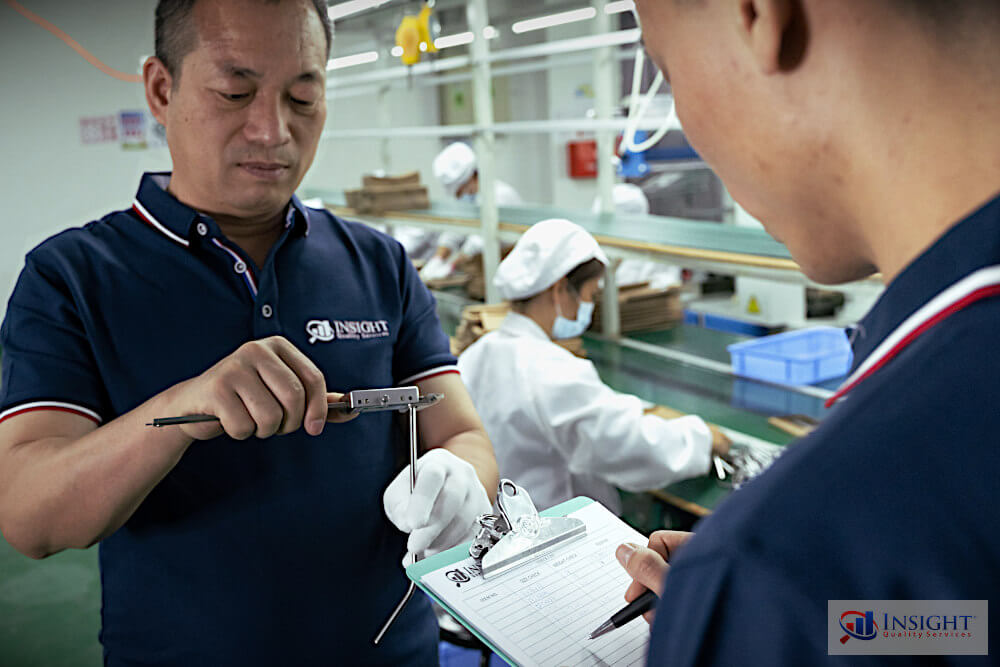
When your product business changes, whether it’s because of higher volumes, new suppliers, or more complex POs, always take the time to review your quality oversight and determine what changes need to be made.
An effective program is one that matches oversight to actual risk. So, simply scaling up the inspections you’re conducting, or sticking to the same routine, can lead to budget wasting at the same time problems are going undetected.
Ask yourself, Are we inspecting:
- At the right frequency?
- At the right stage of production?
- With a checklist that reflects our current products and variations?
Don’t just focus on your past inspection results to guide decisions. Also review audit results, lab testing, and customer complaints to decide where more attention is needed and where reduced oversight may be justified.
So, has anything changed since the last time you reviewed your inspection program? If so, consider whether your current approach still fits your new risk level.
If you need help determining the appropriate mix of inspections and factory audits for your needs and budget, reach out to us at Insight. We’d be happy to help you determine the best approach.
AQL Inspections 101: How They are Conducted
Authors