
Why New Supplier Quality Drops 3 to 6 Months In (and How to Prevent It)



Table of Contents
It usually sounds something like this:
“The samples were perfect, and the first production run shipped without any major issues. Then, over the next three to six months, the quality quietly drifted, and nobody caught on until our customers started complaining.”
This slow drift is one of the most common ways new supplier relationships go wrong, and more importers are exposed to it now.
After a sweeping tariff war and the recent oil shock, the pressure to build more resilient supply chains has pushed importers harder than ever to expand their supplier base.
At the same time, your team may be stretched thin, working tirelessly to coordinate with a new factory on the other side of the planet.
Sometimes trouble shows up right away.
We talk to importers who’ve placed an order with a new supplier in a country like India, Pakistan, or Bangladesh, and it goes wrong almost immediately. That’s painful, but at least it’s obvious.
The more dangerous situation is the one where nothing looks wrong to the buyer at the start. ⚠️
They get solid samples, have a successful first production run, and everything seems on track. Then a few months of orders go by, and the quality has drifted so gradually that no one saw it happen.
They’ve also pulled back oversight, and things keep slowly deteriorating until one day there is a major issue.
This is the situation you really have to watch out for.
Over the years, we’ve learned that quality drift or quality fade has two engines:
- The factory quietly lowering its own bar to save time or cost
- The importer failing to hold the line
Keeping both in check comes down to what you do at three points in the relationship:
- Before the first PO
- During the first few months
- Over the long haul
Here, we’ll walk through each one.
What Needs to Be in Place Before the First PO?

Let’s say you found a promising new supplier for your product. Maybe they’re in Vietnam, India, Mexico, or even China.
The samples look good, the pricing works, and you’re ready to move forward. There are a few steps that tend to make the difference between a relationship that goes smoothly and one that hits serious quality problems down the line.
First, get your mental framing for samples right.
Understand that they only equal potential. The samples you receive don’t come from mass production. They’re not necessarily made with the same process, and they tell you nothing about how consistently the factory will produce over time.
So, with that framing in mind, what should you actually do?
Start by developing clear specifications and sharing them with your factory. Clear specs reduce ambiguity and help you align your expectations with the factory’s from the outset.
From there, as you move from quoting to sampling to placing a PO, you need to validate the factory’s capabilities. This is about more than samples and costing.
You want proof that they can produce what they say they can, and you have a few ways to get it.
- You can visit the factory yourself.
- You can send a third party (like Insight) to conduct an on-site audit for you.
- If cost and timing are tight, you can run a desktop audit (a remote document review) or ask whether the factory has audit reports from other clients they’re willing to share.
Whichever route you choose, validate that the factory can do what they say before you place that PO.
Clear specs, aligned expectations, and a validated factory are the three things you must get right before the order goes out. This way, you’ve removed most of the risk before it has a chance to start.
Why Does Quality Quietly Slip in the First Few Months?

Once the first few purchase orders are out and the relationship is moving along, many supplier relationships quietly begin to drift.
There is no outright major failure that makes it easy to spot, raise the issue, and put a fix in place. With drift, the deviations slowly creep in.
It usually starts small. One of those early shipments has something that doesn’t quite match the spec you agreed on.
For example, the wall thickness on a plastic housing comes in a hair under spec, or a fabric that should be 180 gsm shows up at 165 gsm. It’s minor, so you let it ship instead of making an issue of it.
The exception itself isn’t really the problem. The problem comes in when you don’t tell the factory that it’s an exception.
To the factory, silence reads as approval.
They take that small deviation as the new benchmark, and the next run gets measured against the lower bar, not your original spec. Minor inconsistencies stack up, variability grows, and a few orders later you’ve got a real quality problem.
That’s why communicating about exceptions is so important. When you let something slide, say so out loud. Make sure the factory understands this is a one-off, not a spec change, and not the new standard.
Don’t let a passed inspection report lull you.
A pass doesn’t mean everything is aligned. Just because nothing failed doesn’t mean nothing changed. The early warning signs are easy to wave off precisely because they look so small.
The lesson is simple: never let the drift become the new normal.
How Do the Best Importers Maintain Consistent Quality for Years?
So, you’ve moved past those first few orders, and things are progressing reasonably well. Now the challenge is keeping it that way, and that doesn’t happen on its own.
Some companies maintain a high level of quality for years, while others watch it slowly erode. The difference comes down to what they do once things are going well.
Long-term quality is not a set-it-and-forget-it job. The companies that maintain high quality stay involved even when nothing seems wrong. They don’t set their standards and let them ride.
Consistency is managed, not assumed.
That’s the key, because the moment you relax is usually the moment quality starts to move, and not in the direction you want. It drifts toward whatever is easiest for the factory, and over time, that’s a real threat to your brand and your standards.
Good suppliers stay good because someone is paying attention.
The companies that end up with quality drift tend to make the same mistakes:
- They relax their standards after early success.
- They stop staying involved.
- They pull back too early the first time the factory pushes back.
Underneath all of it is one bad assumption: that stability equals good performance. It doesn’t. Good performance takes consistent oversight, standards that don’t move, and ongoing engagement.
And don’t let high pass rates talk you out of it. Even a 100% pass rate doesn’t guarantee a defect-free shipment.
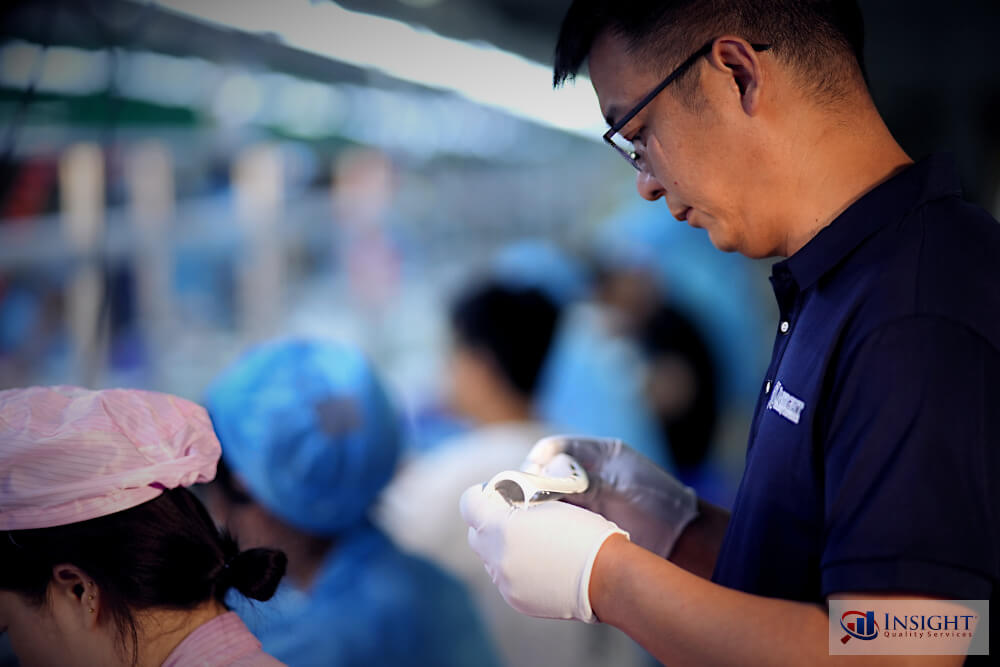
So, stay engaged and build the routines that keep you close to what’s leaving the factory: scheduled in-process or pre-shipment inspections, periodic re-audits, AQL sampling on shipments, and tracking defect trends across orders.
And use the data already coming to you, like inspection reports, returns, and feedback from your own customers.
The companies that navigate this well are the ones that never stop paying attention.
Get the Insight You Need to Keep Suppliers on Track

It all comes down to one thing: staying involved.
The importers who avoid serious brand damage are the ones who don’t let up just because things look fine. And it runs the length of the relationship.
Finding the right supplier is only the start.
What you do before that first PO, how you handle the first few months, and how you stay engaged as the relationship matures, that’s what decides whether you end up with a quality problem or a supplier you can count on for years.
You don’t have to do it alone.
If you’re onboarding a new supplier overseas and want someone on the ground to audit the factory or conduct your inspections, Insight can act as an extension of your team, wherever your suppliers are.
Reach out, and we’d be glad to talk through what you’re working on →
AQL Inspections 101: How They are Conducted
Authors