
Piece-by-Piece Inspection in China: Costs, Practical Limits, and Better Options


Table of Contents
You’ve experienced a quality failure in China or are trying to prevent one. To eliminate risk, you consider hiring an inspection company to help you check every unit, piece by piece, before your goods ship.
On paper, a piece-by-piece inspection (also called a ‘100%’ or ‘full’ inspection) sounds like the safest possible option, since everything is checked and nothing will slip through the cracks. However, these inspections come with practical limits that aren’t always obvious.
At Insight Quality, we do conduct piece-by-piece inspections in China, but we also advise clients when it may not be the best choice. The goal shouldn’t be to inspect more; it should be to reduce risk in the smartest way possible.
Is a full inspection the right choice for your situation? Let’s talk about how they work, where they make sense, and what alternatives you should consider.
What is a Piece-by-Piece (Full/100%) Inspection
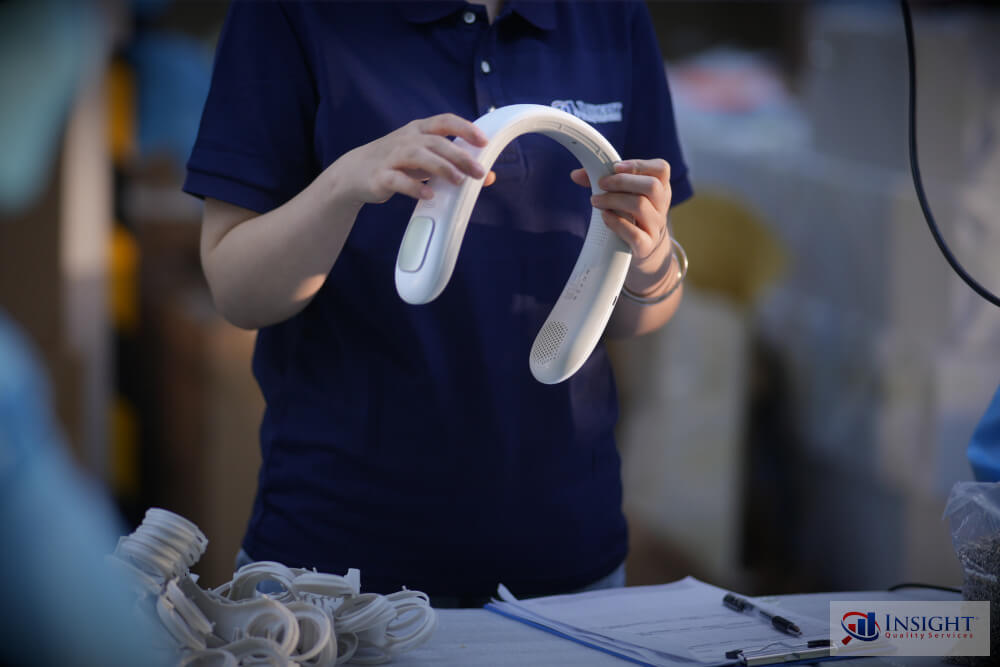
In a piece-by-piece inspection, the inspector evaluates every single unit in a production order instead of selecting a sample. Also known as 100% or full inspection, it means they check each item visually, verify physical requirements, and sometimes conduct functional tests.
Importers most often ask us to conduct these inspections after production finishes but before shipment, though they can sometimes take place on the production line. The specific checks depend on the product, risk profile, and inspection scope agreed on in advance.
Full inspections are designed to reduce the number of defective items shipped, but they don’t automatically eliminate all risk. Time constraints, inspection criteria, and human factors still play a role, especially when large volumes are involved.
When a 100% Inspection Makes Sense
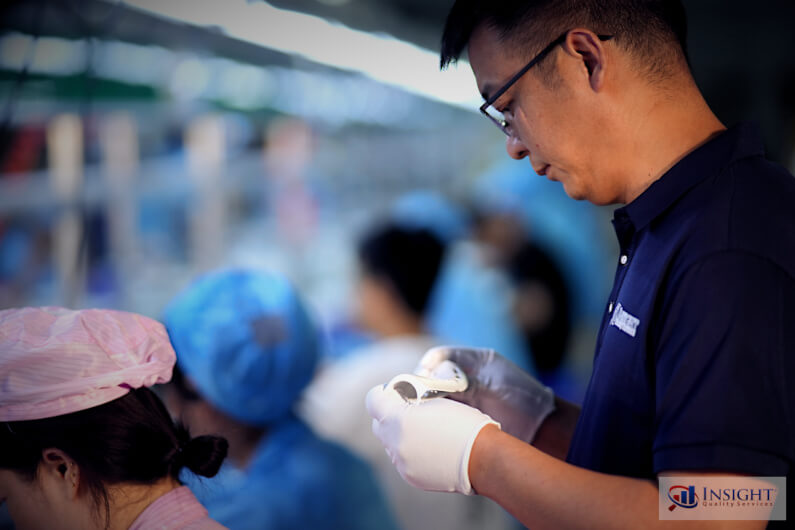
Inspecting every unit can be appropriate in certain high-risk situations, including:
- High-value or high-risk product. For products with significant safety or regulatory exposure, such as aerospace parts, medical devices, or precision industrial components, a piece-by-piece inspection may be justified to reduce risk as much as possible.
- Systemic quality issues. When you expect a high defect rate due to known process or supplier problems, you can use 100% inspections to temporarily contain the risk while issues are identified and corrected. Once stability improves, you can switch to sampling inspections.
- Low production volumes. When order quantities are small, the cost difference between a 100% inspection and random sampling may be manageable.
Full inspections require more time and cost than random sampling. Inspectors can only check a limited number of units per day, and inspections are billed based on the number of on-site “man-days” required. So, piece-by-piece inspections are best used intentionally rather than as a default approach.
When a 100% Inspection Often Doesn’t
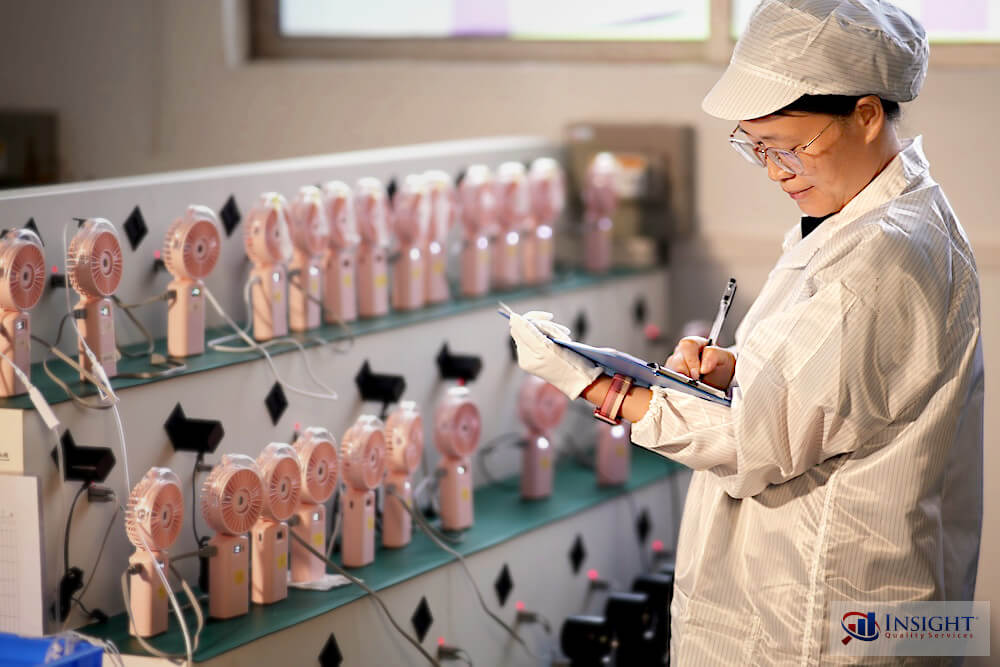
In many cases, inspecting every unit adds cost without proportionate risk reduction, including when:
- Producing standard consumer products. For mature, non-safety-critical consumer goods, it’s generally accepted that a small percentage of defects may occur. Inspecting every unit often delivers diminishing returns.
- No systemic issue. If defect rates are low and issues are isolated rather than widespread, a full inspection is unlikely to provide meaningful additional protection.
- Normal production volumes. As order sizes increase, the time and cost required to inspect every unit can escalate quickly.
In these scenarios, AQL sampling inspections, which are the industry standard for statistically reliable quality verification, often provide effective risk mitigation without the added time and expense of a 100% inspection.
Why Importers Choose Insight Quality
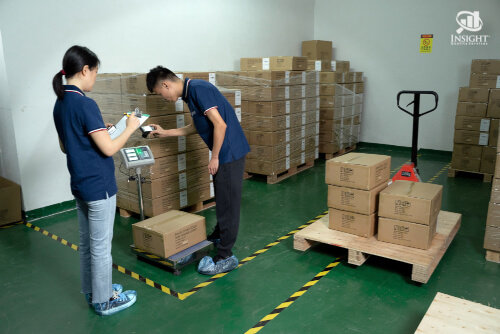
When you’re managing production from thousands of miles away, you need more than inspections. You need a partner who takes the time to fully understand your product, speaks the same language as your factory, and protects your brand as if they were a part of your team.
Our clients often tell us we are an “extension of their team” or serve as their “China office,” helping them manage quality effectively without adding local headcount in China.
We’re a US-based company headquartered in Dallas, with operations in 32 countries. We coordinate our inspection network across China via our Asia operations base in Shenzhen, providing you with a responsive team on the ground.
We have conducted tens of thousands of inspections and have experience identifying a wide range of issues and helping clients to rectify them.
Whether you want to verify quality before goods ship, while they’re still in production, or even check the quality of your raw materials, our inspection services can help you catch issues early and ship with confidence.
Want to see how we work?
Download a sample inspection report to see exactly how findings are documented, or contact us today to discuss your needs.
AQL Inspections 101: How They are Conducted
Authors